15 Ways to Reduce House Construction Cost in Hyderabad Without Compromising Quality
Building a house in Hyderabad is a major investment. For most homeowners, the biggest challenge is not simply reducing the construction cost—it is controlling the total project cost without compromising structural quality, safety, or long-term durability.
Construction costs can increase unexpectedly because of material wastage, design changes, inaccurate measurements, poor contractor coordination, unnecessary purchases, delayed decisions, and weak payment controls.
The good news is that many of these costs can be controlled through proper planning, documentation, measurement, and regular site supervision.
Here are 15 practical ways to control and reduce house construction costs in Hyderabad without compromising quality.
1. Prepare a BOQ Before Starting Construction
One of the most important steps in controlling construction cost is preparing a Bill of Quantities (BOQ) before starting the project.
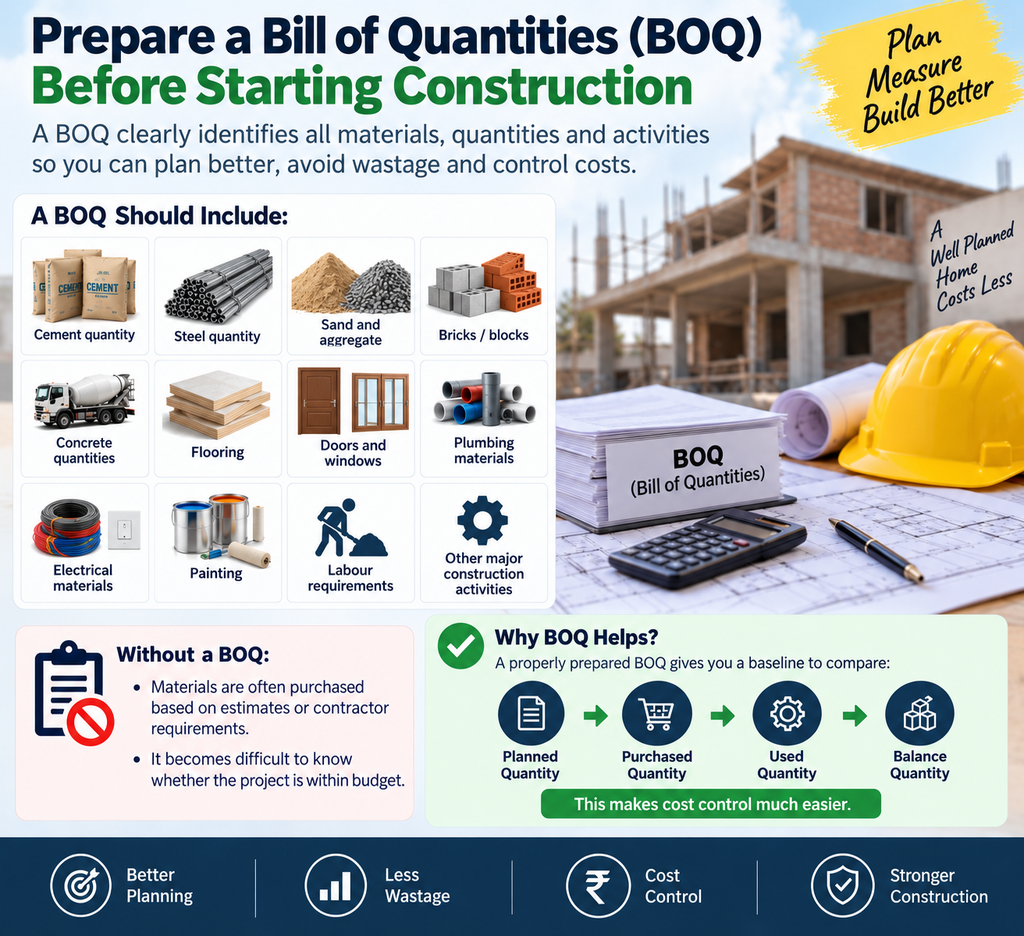
A BOQ should clearly identify:
- Cement quantity
- Steel quantity
- Sand and aggregate
- Bricks/blocks
- Concrete quantities
- Flooring
- Doors and windows
- Plumbing materials
- Electrical materials
- Painting
- Labour requirements
- Other major construction activities
Without a BOQ, homeowners often purchase materials based on estimates or contractor requirements.
This can make it difficult to understand whether the project is actually within budget.
Why BOQ helps
A properly prepared BOQ gives you a baseline against which you can compare:
Planned Quantity → Purchased Quantity → Used Quantity → Balance Quantity
This makes cost control much easier.
2. Don’t Compare Contractors Only on ₹/Sq.Ft.
One of the most common mistakes homeowners make is selecting a contractor purely based on the lowest ₹/sq.ft. quotation.
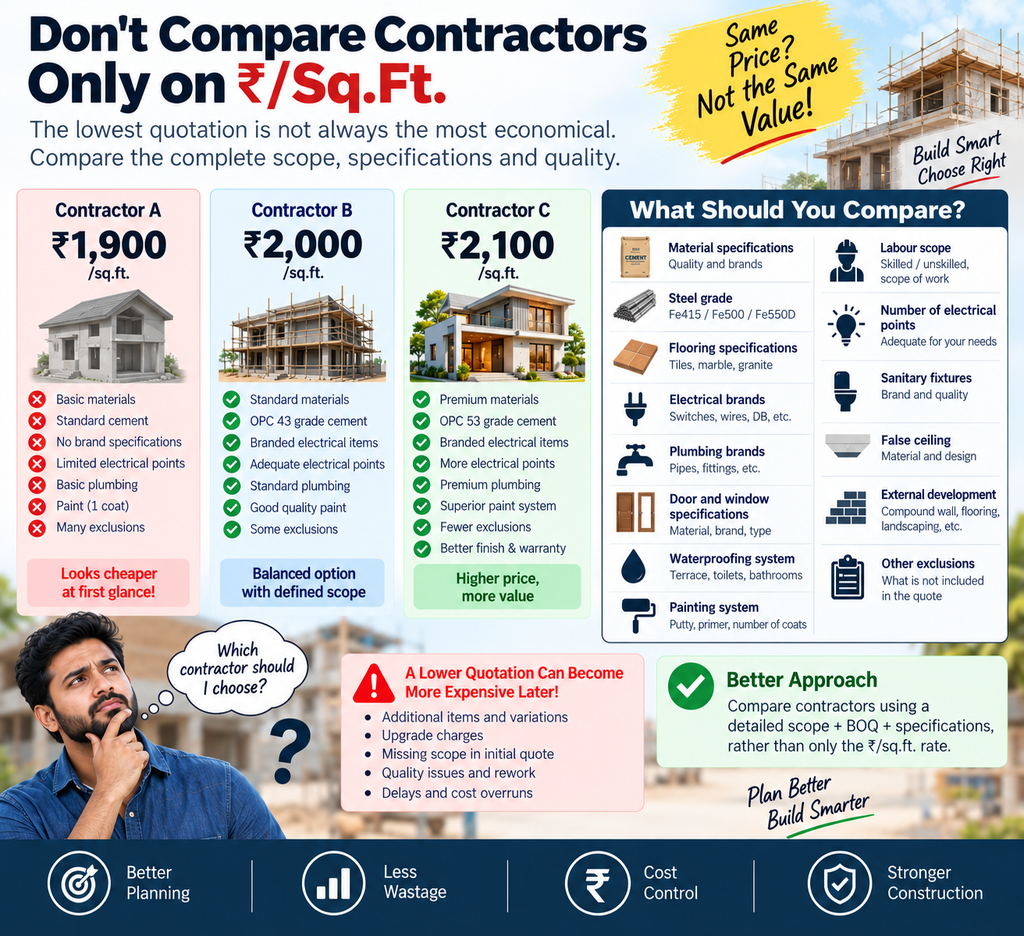
For example:
- Contractor A: ₹1,900/sq.ft.
- Contractor B: ₹2,000/sq.ft.
- Contractor C: ₹2,100/sq.ft.
At first glance, Contractor A appears cheaper.
But what exactly is included in each quotation?
You should compare:
- Material specifications
- Cement grade
- Steel grade
- Flooring specifications
- Electrical brands
- Plumbing brands
- Door and window specifications
- Waterproofing system
- Painting system
- Labour scope
- Number of electrical points
- Sanitary fixtures
- False ceiling
- External development
- Other exclusions
A lower initial quotation can sometimes become more expensive when additional items and variations are added later.
Better approach
Compare contractors using a detailed scope + BOQ + specifications, rather than only the ₹/sq.ft. rate.
3. Freeze Architectural Drawings Before Construction
Design changes during construction can increase costs significantly.
Changing a wall position after masonry has started can result in:
- Demolition
- Additional labour
- Material wastage
- Rework
- Delays
- Changes to electrical and plumbing lines
Before starting construction, try to finalize:
- Floor plans
- Elevations
- Room sizes
- Door and window positions
- Staircase
- Kitchen layout
- Toilet layout
- Electrical points
- Plumbing points
A few hours spent finalizing drawings can prevent expensive rework later.
4. Get Structural Design Before Construction
Structural design should be completed before major construction activities begin.
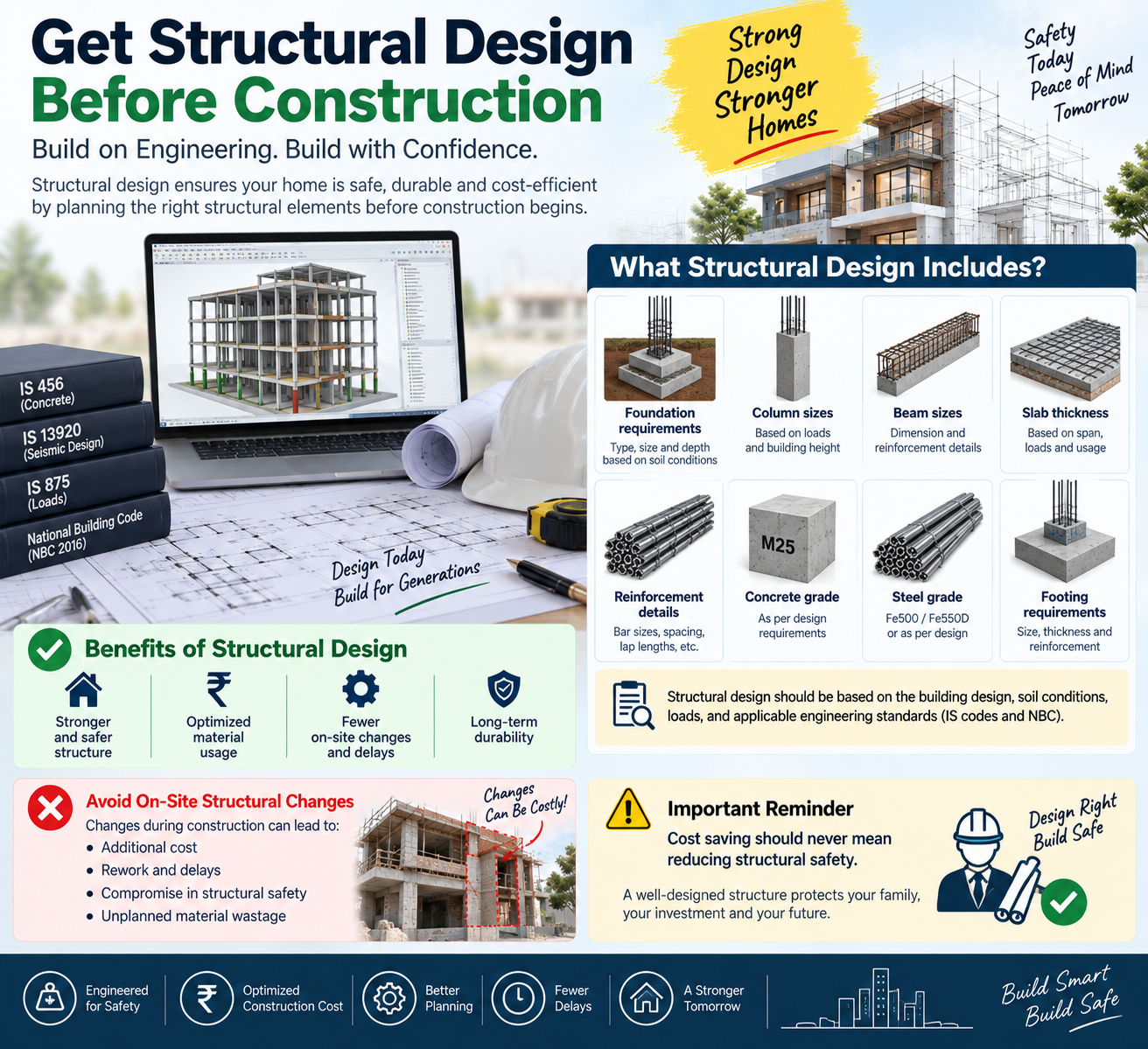
The structural design should establish important elements such as:
- Foundation requirements
- Column sizes
- Beam sizes
- Slab thickness
- Reinforcement details
- Concrete grade
- Steel grade
- Footing requirements
Structural decisions should be based on the building design, soil conditions, loads, and applicable engineering standards.
Avoid making structural changes at the site without consulting the structural engineer.
Cost saving should never mean reducing structural safety.
5. Control Steel Wastage
Steel is one of the major components of a house construction budget.
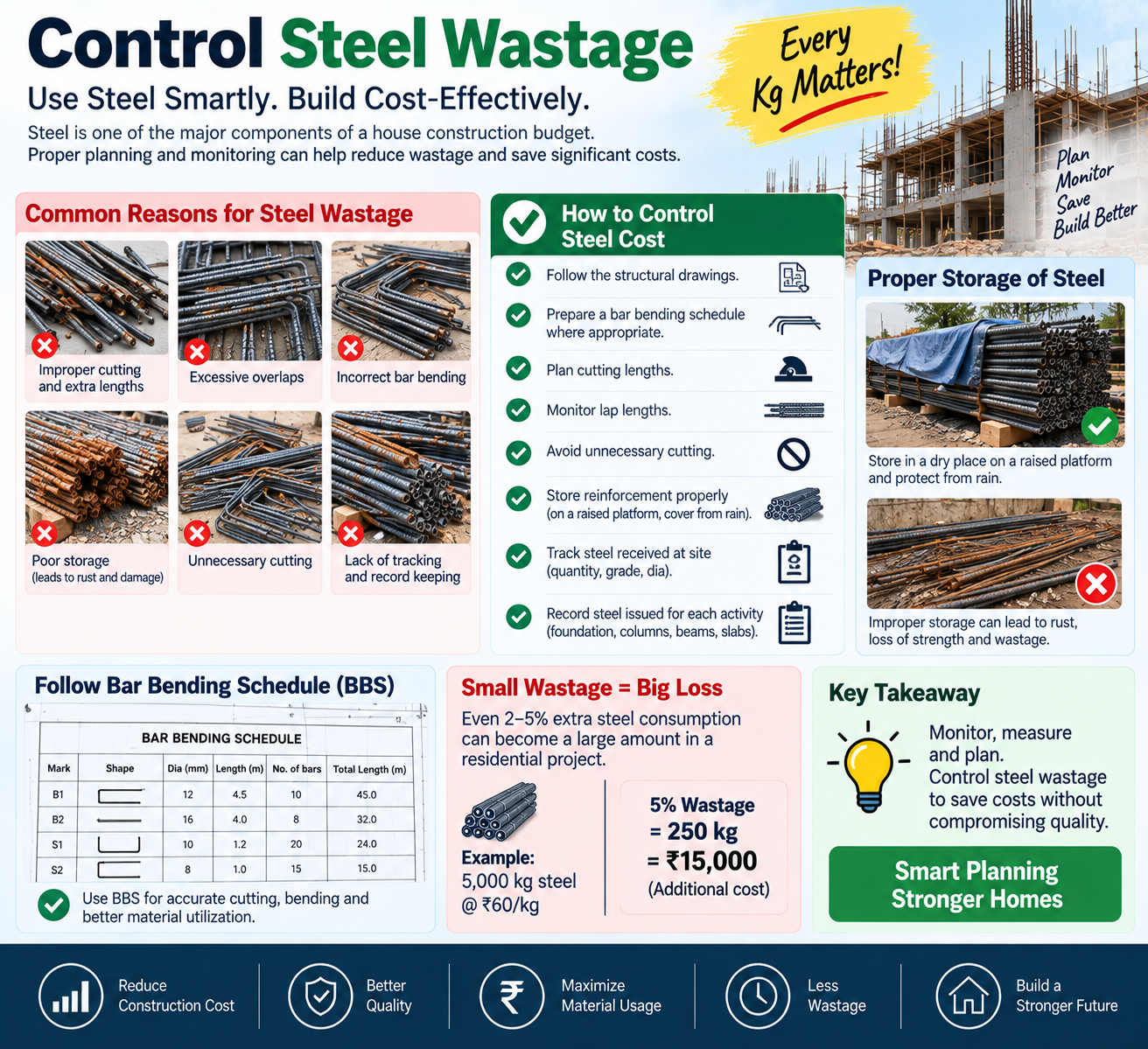
Improper cutting, excessive overlaps, poor storage, and incorrect bar bending can increase steel consumption.
To control steel cost:
- Follow the structural drawings.
- Prepare a bar bending schedule where appropriate.
- Plan cutting lengths.
- Monitor lap lengths.
- Avoid unnecessary cutting.
- Store reinforcement properly.
- Track steel received at site.
- Record steel issued for each activity.
A small percentage of unnecessary steel consumption can become a significant amount when the project involves several tonnes of reinforcement.
6. Control Cement Consumption
Cement wastage is another area where construction costs can increase.
Common causes include:
- Poor storage
- Damaged bags
- Incorrect mortar proportions
- Excessive concrete wastage
- Improper mixing
- Unplanned material preparation
Cement should be stored properly and protected from moisture.
For concrete and mortar, the specified mix and construction methodology should be followed instead of using additional cement simply as a precaution.
More cement does not automatically mean better construction.
7. Verify Material Quantities Before Payment
Don’t rely only on supplier invoices.
When materials arrive at the site, verify quantities wherever practical.
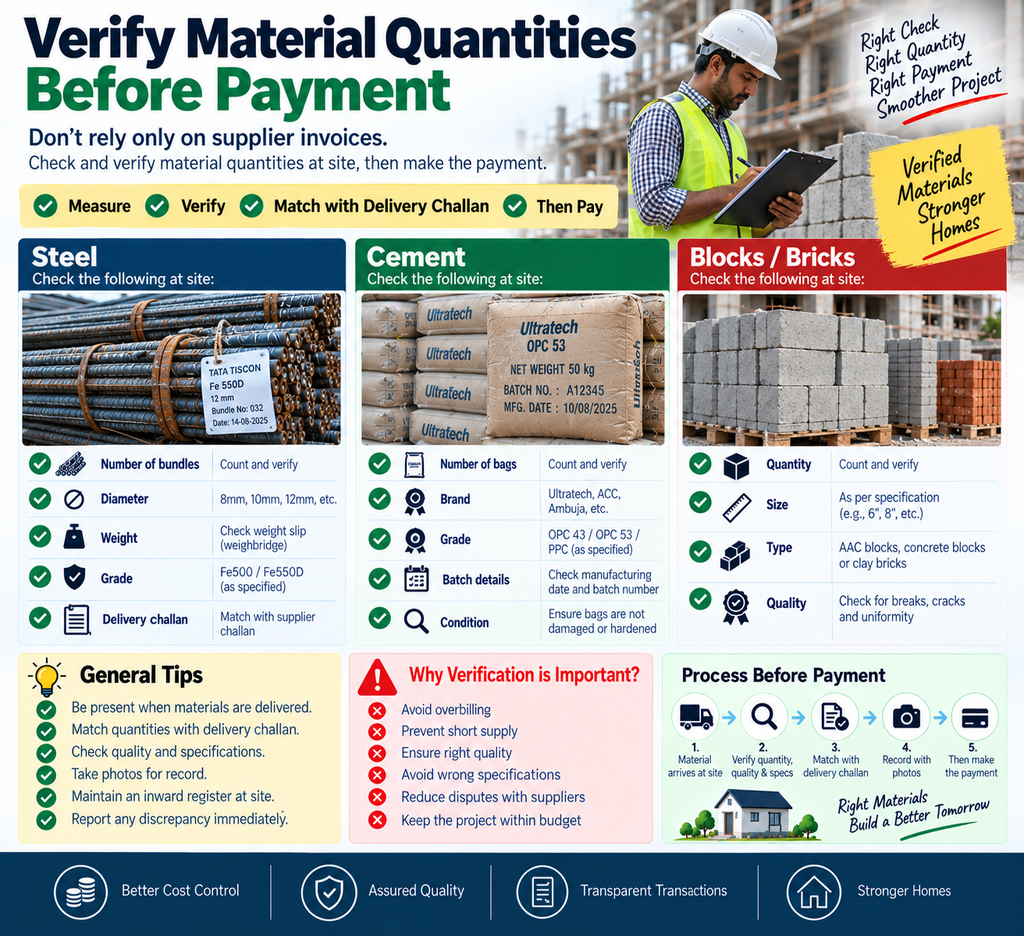
For example:
Steel
Check:
- Number of bundles
- Diameter
- Weight
- Grade
- Delivery challan
Cement
Check:
- Number of bags
- Brand
- Grade
- Batch details where relevant
Blocks/bricks
Check:
- Quantity
- Size
- Type
- Quality
Proper measurement and documentation help prevent discrepancies between ordered quantity, delivered quantity, and billed quantity.
8. Check Concrete Quality
Concrete is one of the most important components of a building.
Cost control should never involve reducing concrete quality.
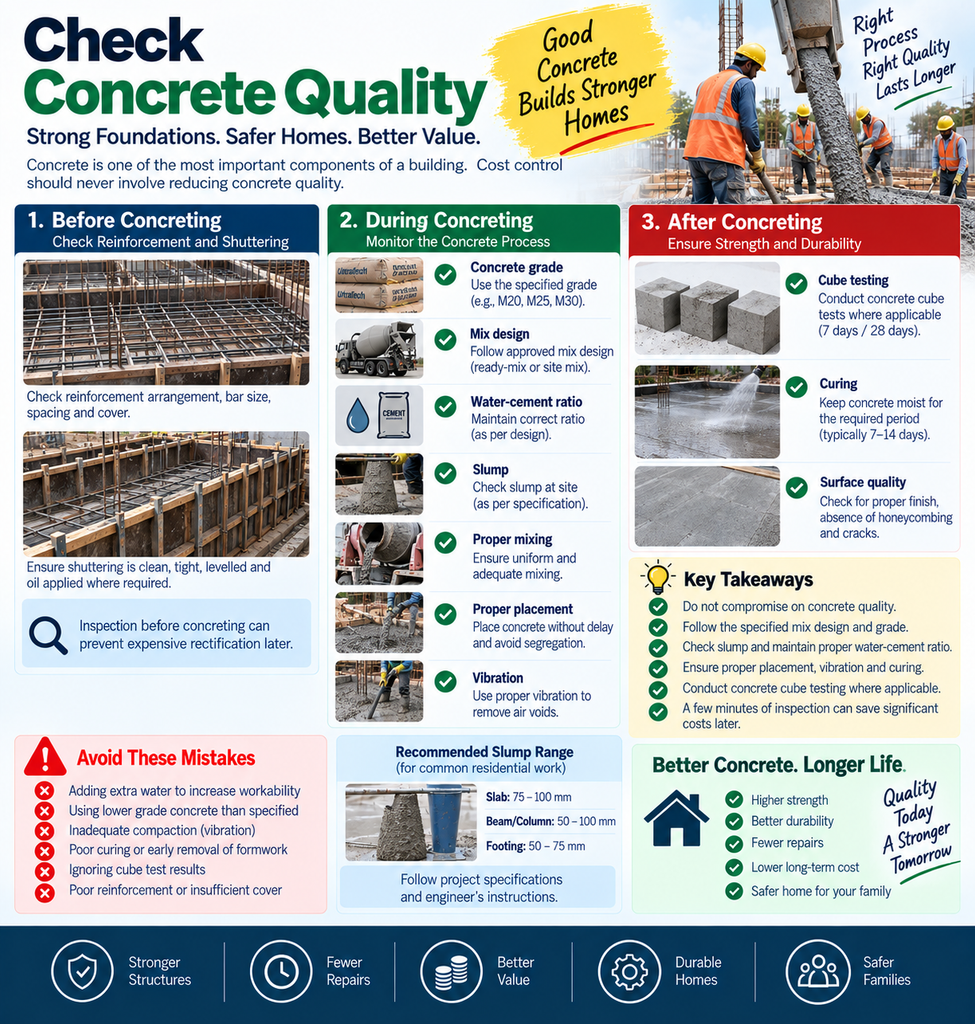
Important checks can include:
- Concrete grade
- Mix design where applicable
- Water-cement ratio
- Slump
- Proper mixing
- Proper placement
- Vibration
- Reinforcement arrangement
- Cover
- Curing
- Concrete cube testing where applicable
Before concreting, the reinforcement and shuttering should also be inspected.
A few minutes of inspection before a concrete pour can prevent expensive rectification later.
9. Avoid Unnecessary Design Changes
Homeowners naturally change their minds during construction.
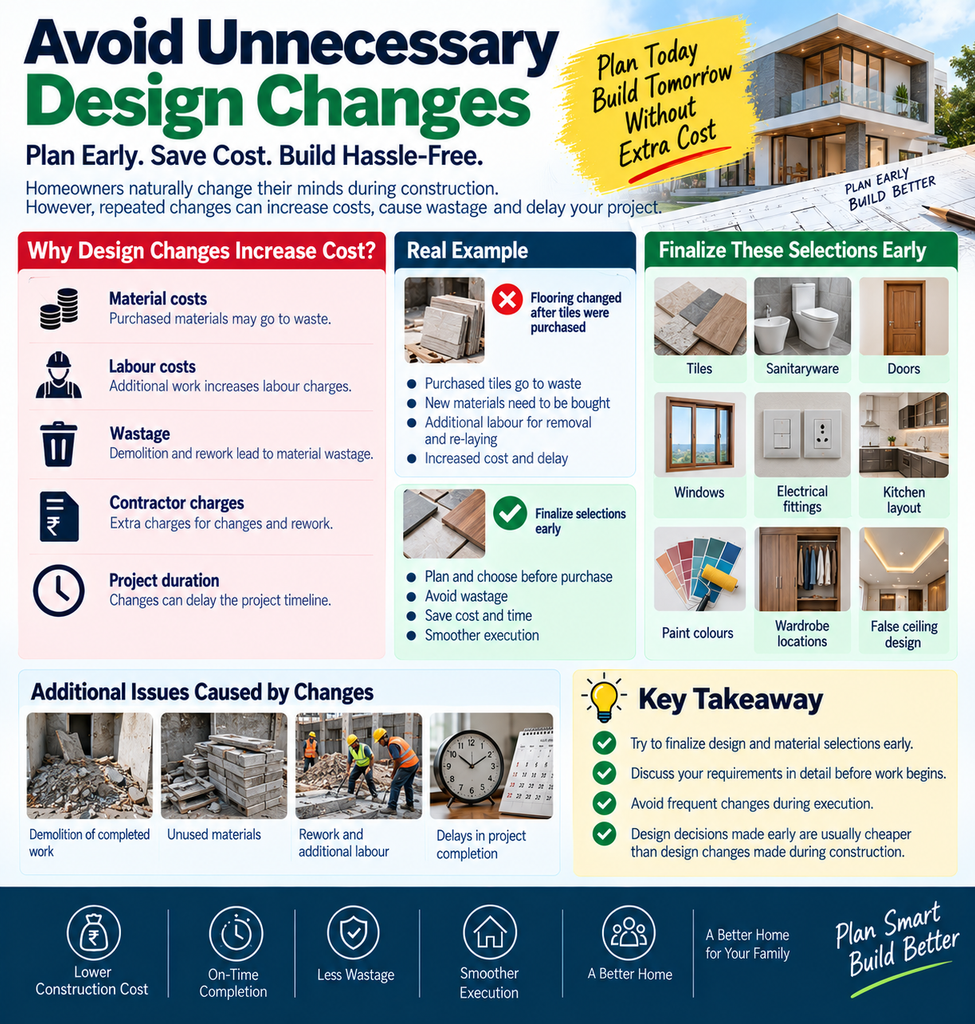
However, repeated changes can increase:
- Material costs
- Labour costs
- Wastage
- Contractor charges
- Project duration
For example, changing flooring after tiles have already been purchased can create both material wastage and additional labour.
Try to finalize important selections early:
- Tiles
- Sanitaryware
- Doors
- Windows
- Electrical fittings
- Kitchen layout
- Paint colours
- Wardrobe locations
- False ceiling design
Design decisions made early are usually cheaper than design changes made during execution.
10. Monitor Contractor Bills Carefully
Contractor bills should be based on actual completed work and agreed measurements.
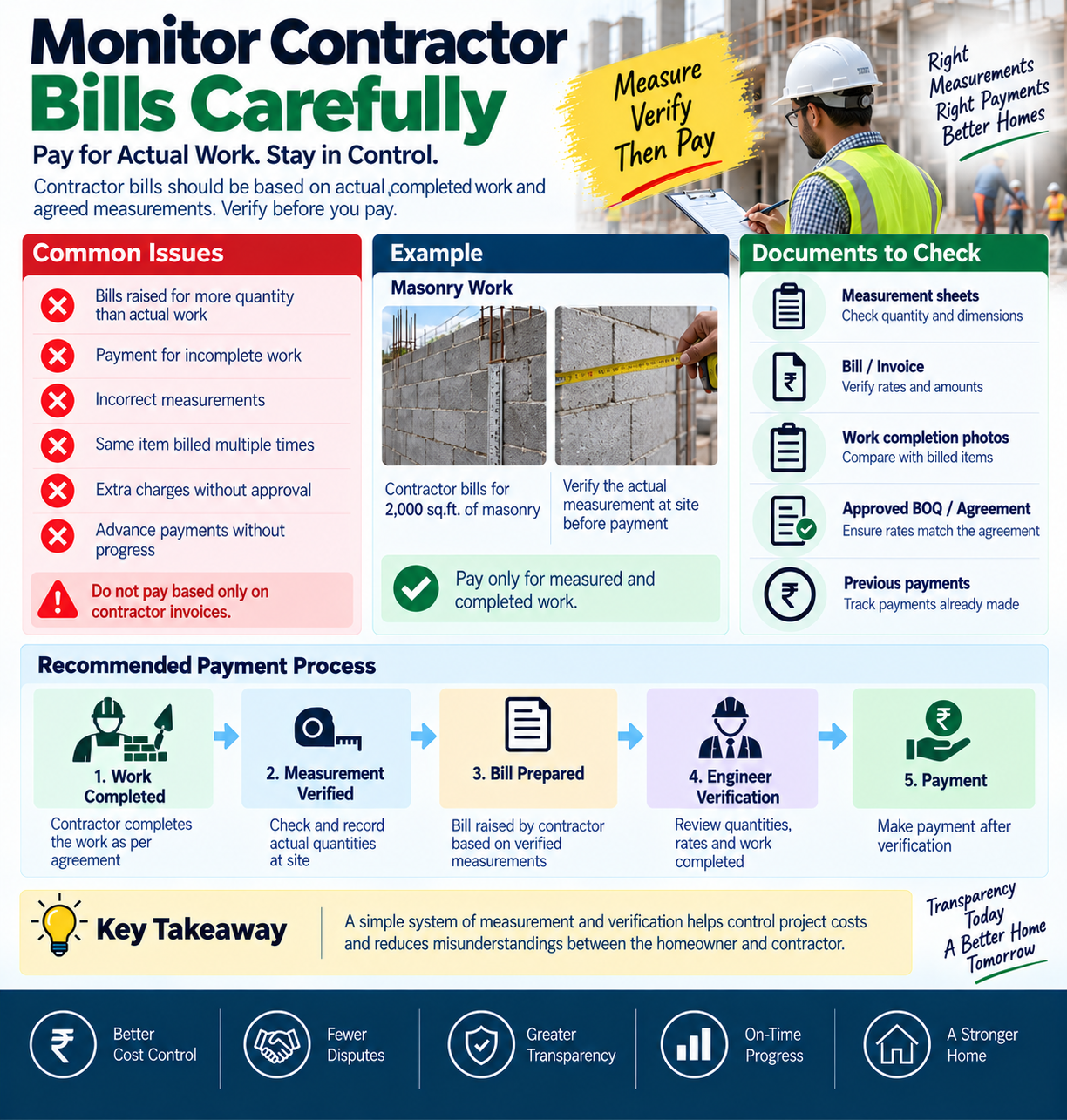
For example, if masonry work is billed based on 2,000 sq.ft., the measurement should be verified before payment.
A simple system can be:
Work Completed → Measurement Verified → Bill Prepared → Engineer Verification → Payment
This provides better control over project expenditure.
It also reduces misunderstandings between the homeowner and contractor.
11. Use Stage-Wise Payments and Should be after Doing the work
Avoid making large advance payments without linking them to project progress.
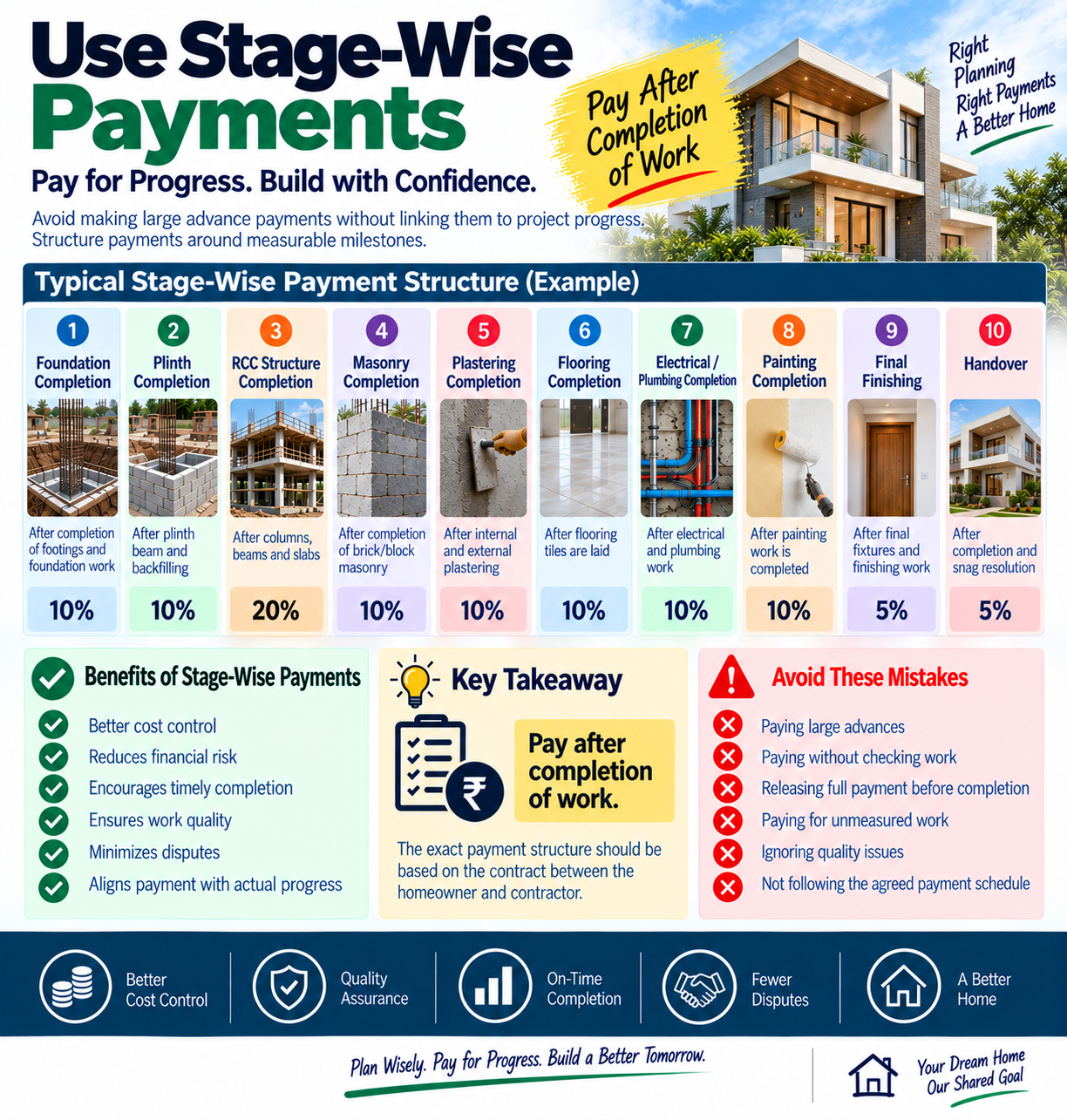
Instead, structure payments around measurable milestones.
For example:
- Foundation completion
- Plinth completion
- RCC structure completion
- Masonry completion
- Plastering completion
- Flooring completion
- Electrical/plumbing completion
- Painting
- Final finishing
- Handover
The exact payment structure should be based on the contract between the homeowner and contractor.
The principle is simple:
Payment should follow verified progress.
12. Maintain Material Reconciliation
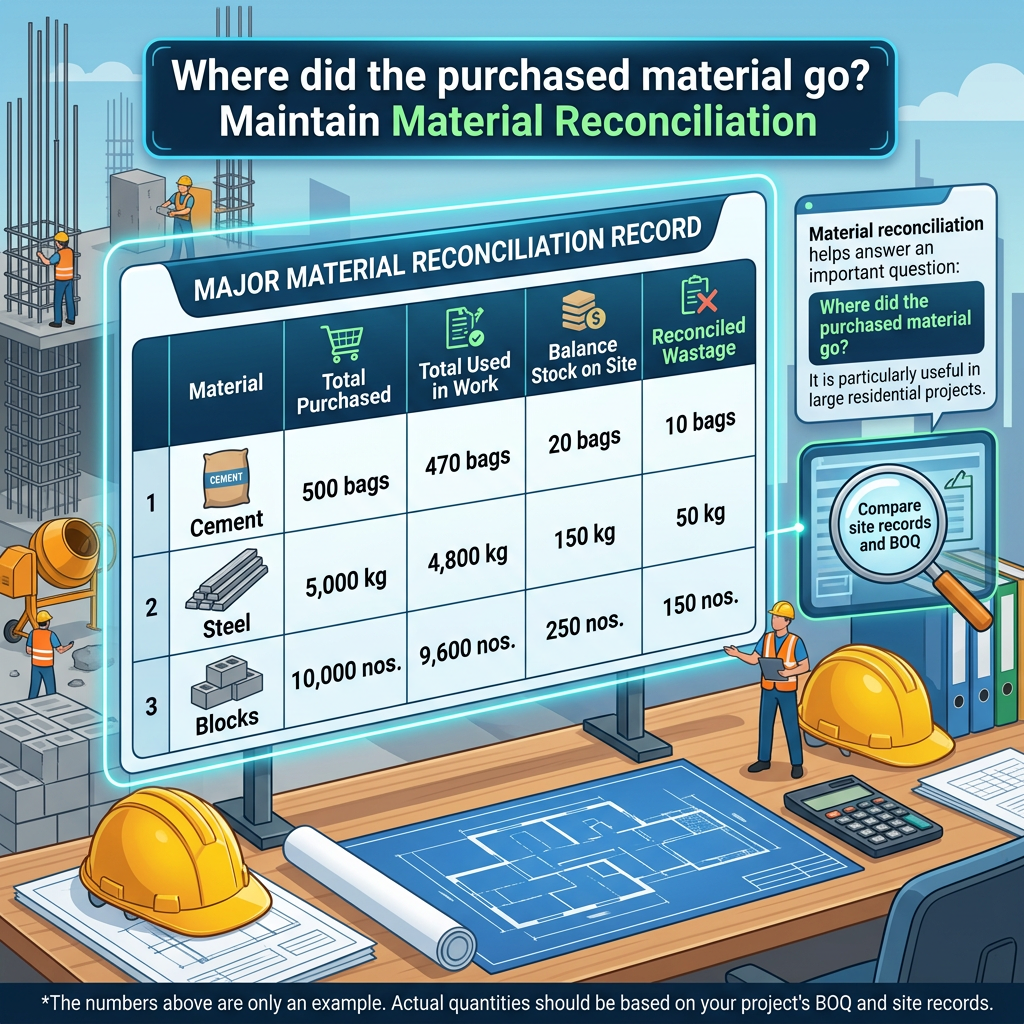
Material reconciliation helps answer an important question:
Where did the purchased material go?
For major materials, maintain records such as:
| Material | Purchased | Used | Balance | Wastage |
|---|---|---|---|---|
| Cement | 500 bags | 470 bags | 20 bags | 10 bags |
| Steel | 5,000 kg | 4,800 kg | 150 kg | 50 kg |
| Blocks | 10,000 | 9,600 | 250 | 150 |
The numbers above are only an example. Actual quantities should be based on your project’s BOQ and site records.
Material reconciliation becomes particularly useful in large residential projects.
13. Inspect Reinforcement Before Concreting
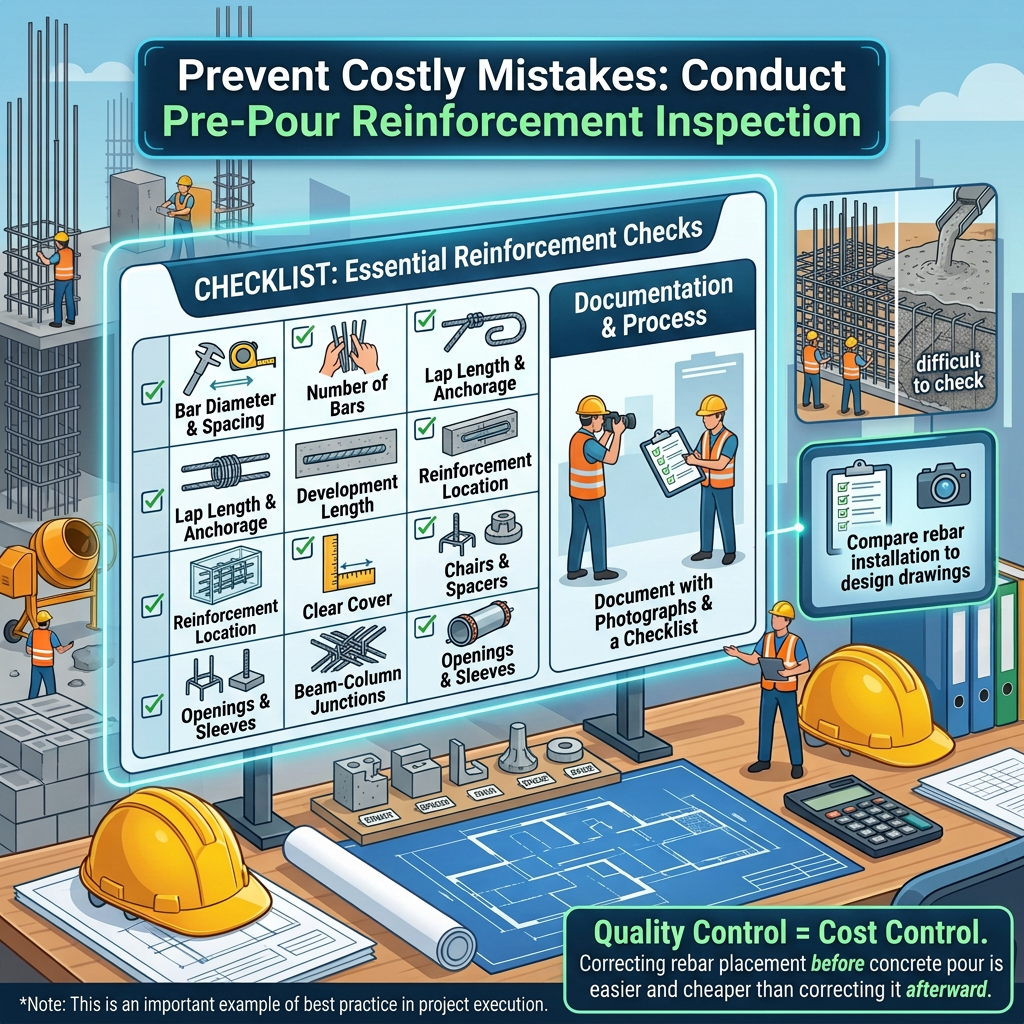
Once concrete is poured, checking the reinforcement becomes difficult.
Therefore, reinforcement should be inspected before every major concrete pour.
Important checks include:
- Bar diameter
- Bar spacing
- Number of bars
- Lap length
- Anchorage
- Development length
- Reinforcement location
- Clear cover
- Chairs/spacers
- Beam-column junctions
- Openings and sleeves
The inspection should be documented with photographs and, where appropriate, an inspection checklist.
This is an important example of how quality control can also become cost control.
Preventing a mistake before concreting is usually much easier than correcting it afterward.
14. Track Project Progress Regularly
Time is money in construction.
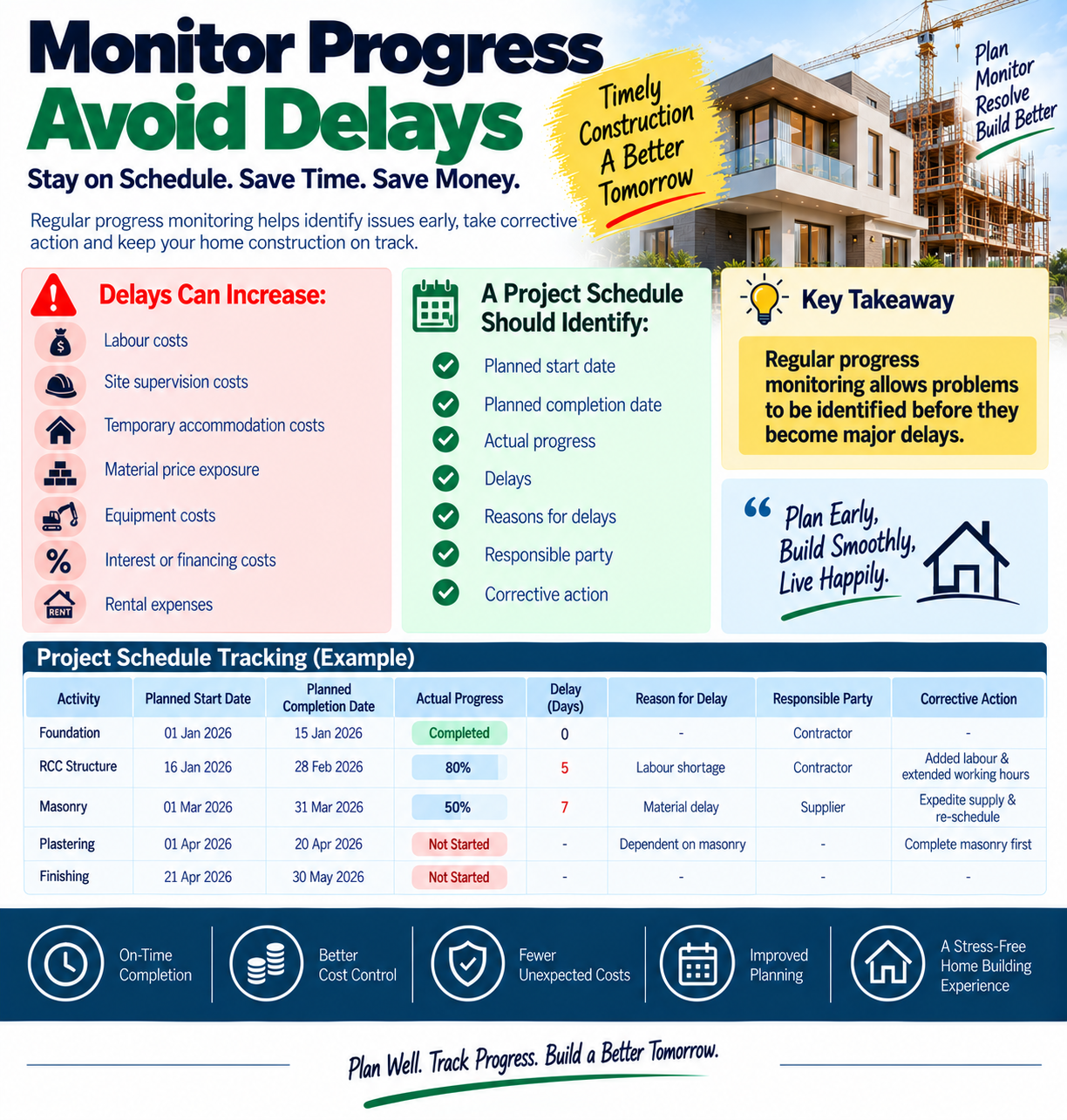
Project delays can increase:
- Labour costs
- Site supervision costs
- Temporary accommodation costs
- Material price exposure
- Equipment costs
- Interest or financing costs
- Rental expenses
A basic project schedule should identify:
- Planned start date
- Planned completion date
- Actual progress
- Delays
- Reasons for delays
- Responsible party
- Corrective action
Regular progress monitoring allows problems to be identified before they become major delays.
How Much Can You Actually Save?
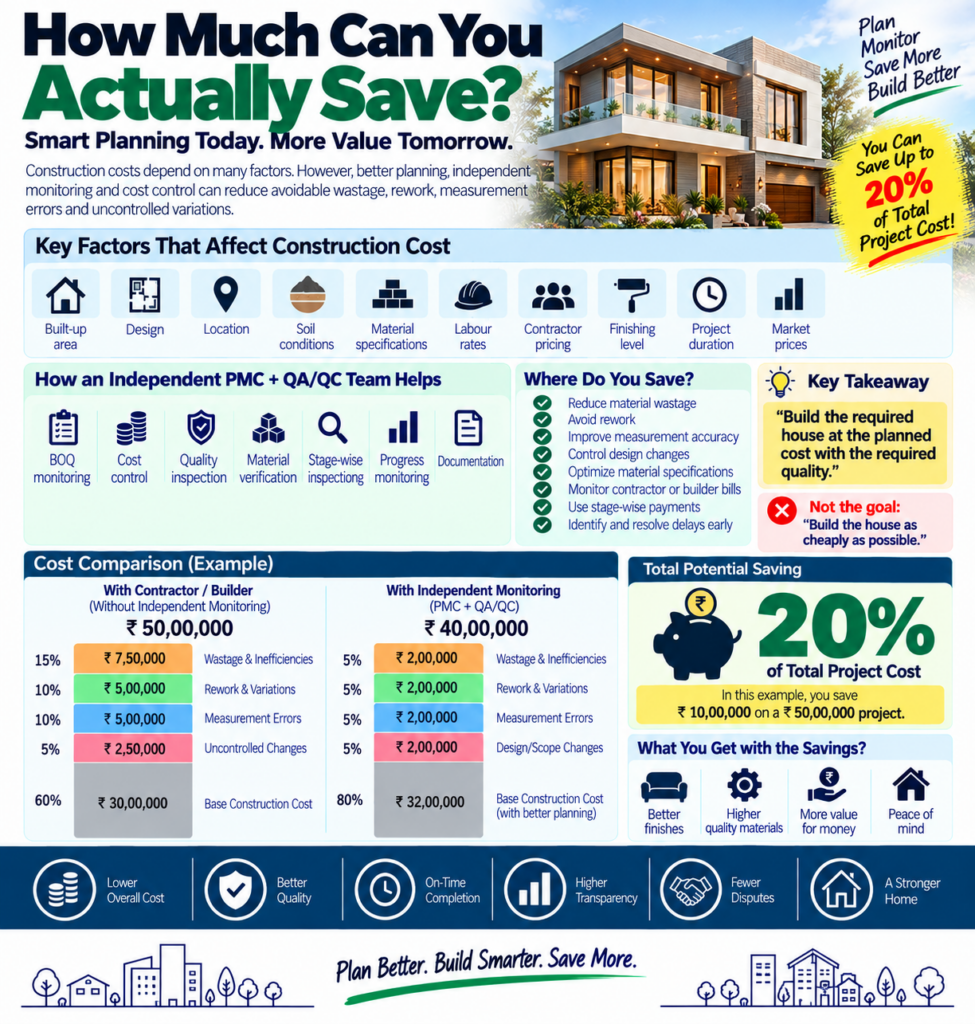
There is no fixed percentage that every homeowner will save because construction cost depends on:
- Built-up area
- Design
- Location
- Soil conditions
- Material specifications
- Labour rates
- Contractor pricing
- Finishing level
- Project duration
- Market prices
However, better planning and cost monitoring can reduce avoidable wastage, rework, measurement errors, and uncontrolled variations.
The objective should not be:
“Build the house as cheaply as possible.”
The better objective is:
Build the required house at the planned cost with the required quality.
The Role of an Independent PMC + QA/QC Team
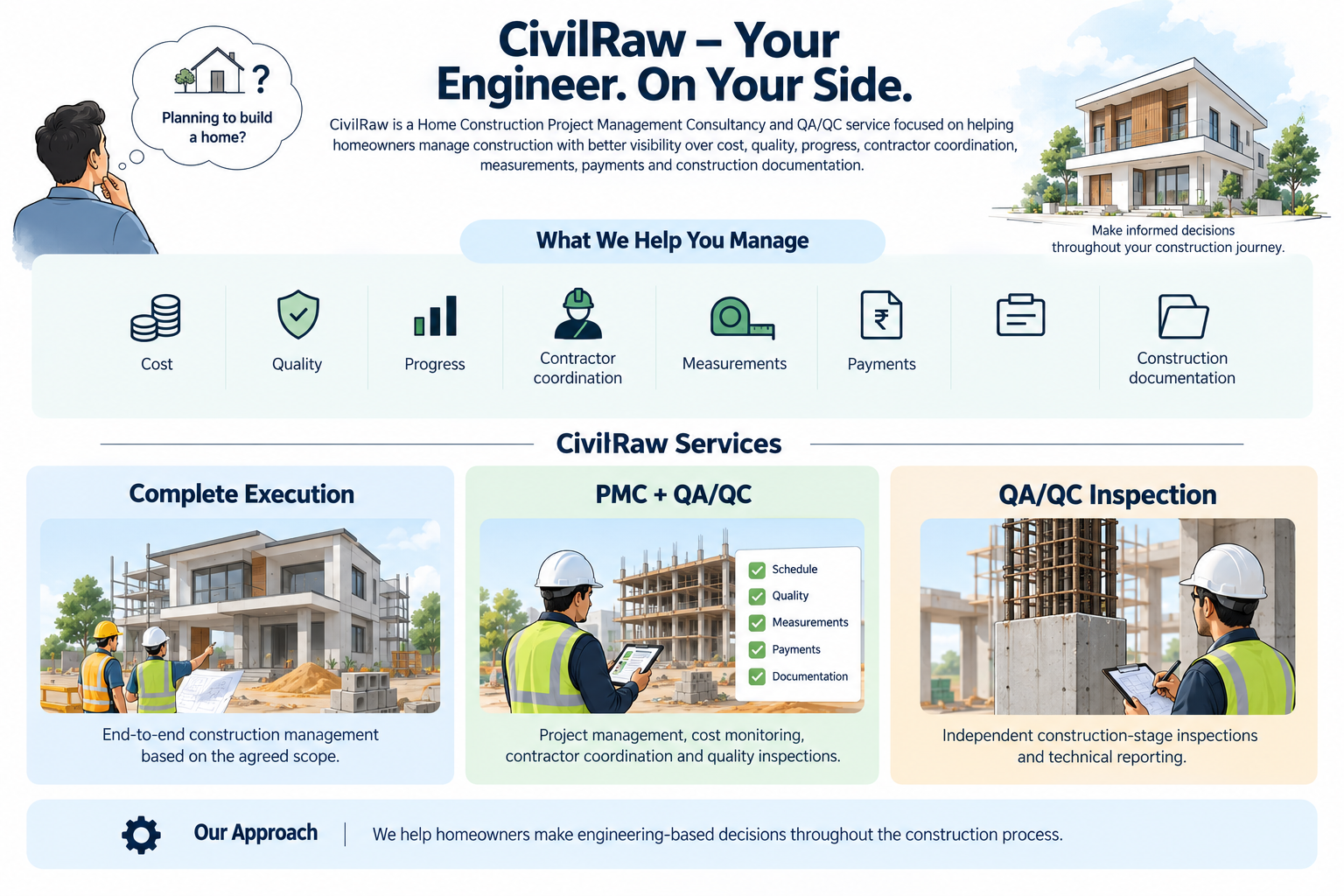
This is where an independent Project Management Consultancy (PMC) and QA/QC team can help.
Instead of depending entirely on the contractor to manage cost, quality, measurements, and progress, an independent technical team can monitor the project from the homeowner’s side.
A PMC + QA/QC team can assist with:
BOQ Monitoring
Track planned quantities against actual work and material consumption.
Cost Control
Monitor contractor bills, measurements, variations, and project expenditure.
Quality Inspection
Inspect important construction stages and verify work against drawings and specifications.
Material Verification
Check materials delivered to the site against approved specifications and quantities.
Stage-Wise Inspections
Inspect critical activities such as:
- Foundation
- Reinforcement
- RCC
- Masonry
- Waterproofing
- Plumbing
- Electrical
- Flooring
- Finishing
Progress Monitoring
Track planned versus actual progress and identify delays.
Documentation
Maintain inspection reports, photographs, measurements, snag lists, and project records.
CivilRaw – Independent PMC + QA/QC for Homeowners
CivilRaw helps homeowners manage residential construction with greater visibility over cost, quality, progress, measurements, contractor coordination, payments, and construction documentation.
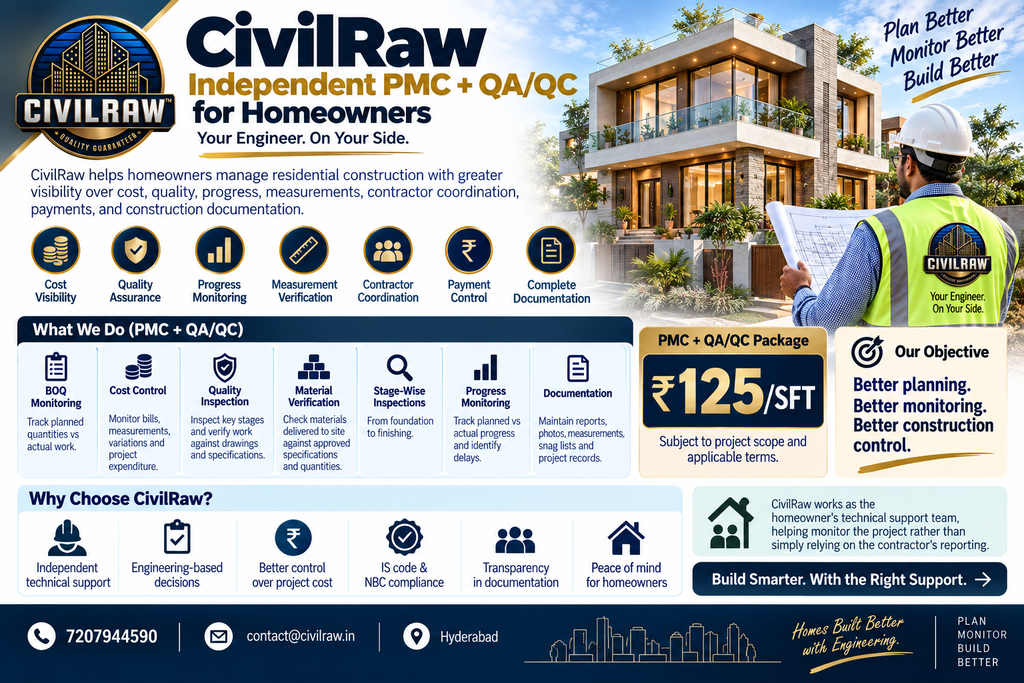
CivilRaw’s PMC + QA/QC package is priced at ₹125/SFT, subject to project scope and applicable terms.
The service focuses on helping homeowners make engineering-based decisions while maintaining better control over the construction process.
The objective is simple:
Better planning. Better monitoring. Better construction control.
CivilRaw works as the homeowner’s technical support team, helping monitor the project rather than simply relying on the contractor’s reporting.
Final Checklist: Before You Start Your House Construction
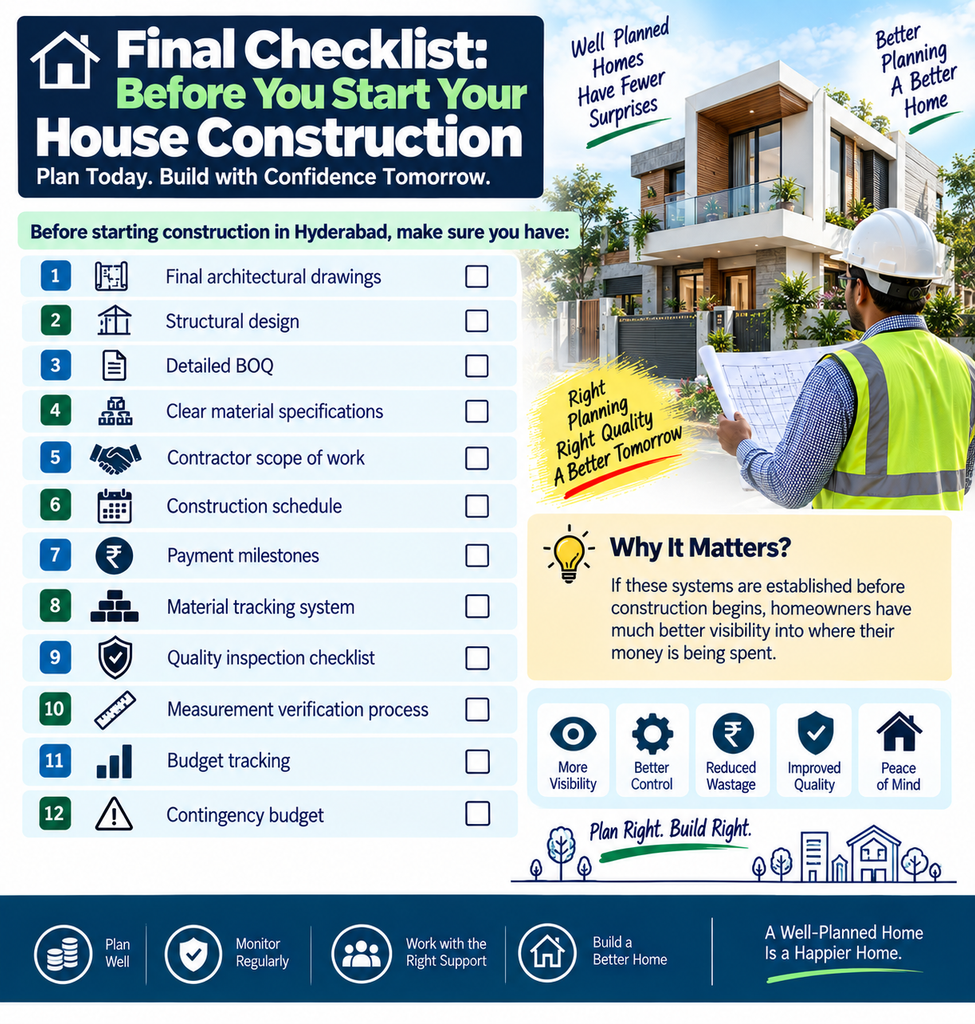
Before starting construction in Hyderabad, make sure you have:
☐ Final architectural drawings
☐ Structural design
☐ Detailed BOQ
☐ Clear material specifications
☐ Contractor scope of work
☐ Construction schedule
☐ Payment milestones
☐ Material tracking system
☐ Quality inspection checklist
☐ Measurement verification process
☐ Budget tracking
☐ Contingency budget
If these systems are established before construction begins, homeowners have much better visibility into where their money is being spent.
Conclusion
Reducing house construction cost does not mean choosing the cheapest materials or the cheapest contractor.
The biggest opportunity is often in preventing wastage, avoiding rework, controlling quantities, verifying bills, monitoring progress, and making decisions before mistakes become expensive.
A well-managed construction project can give homeowners better control over both cost and quality.
If you are planning to construct a house in Hyderabad, start with a proper BOQ, drawings, structural design, budget, schedule, and quality-control system before beginning site execution.
CivilRaw – Built for Homeowners.
For PMC, QA/QC, construction management, and technical support for your home construction project, visit civilraw.in or contact CivilRaw at 7207944590.
Use the CivilRaw Construction Cost Calculator
Or contact the CivilRaw team for assistance with your project.
CivilRaw
Your Engineer. On Your Side.
Home Construction | PMC | QA/QC | Project Management
7207944590
Serving Homeowners in Hyderabad

Planning Your Construction?
Don't rely on guesswork. Get a transparent, engineer-backed estimate for your home.
Get Cost Estimate